Toilet running continuously
The flapper, float, fill valve, chain or water level may prevent the tank from shutting off. An inspection helps ensure that only the defective components are replaced.
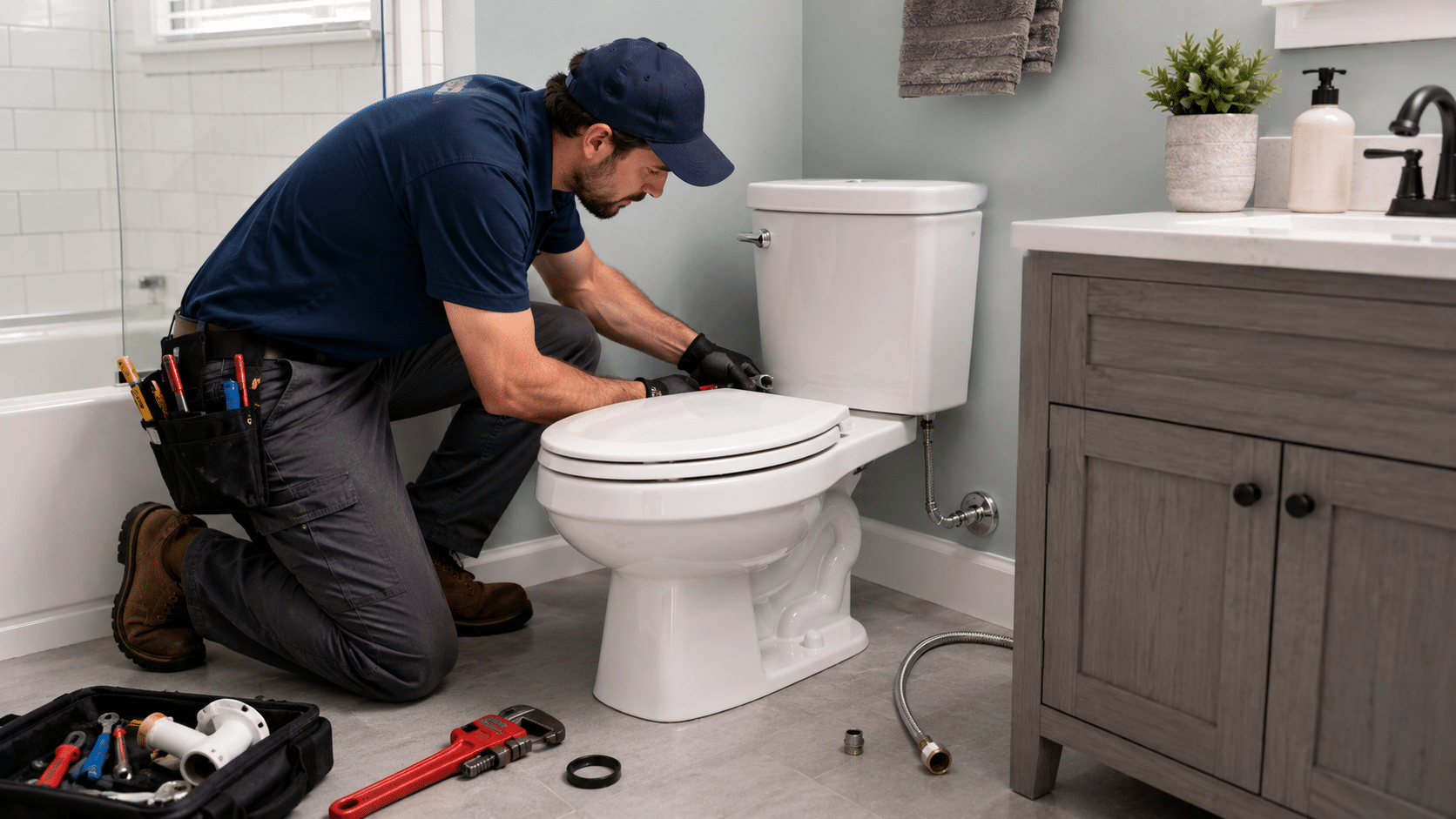
A toilet that runs continuously, a faucet leaking at the base, an ineffective flush or a poorly secured plumbing fixture can waste water and gradually damage nearby surfaces. The appropriate service depends on the defective component, the condition of the fixture, the shutoff valves, the connections and the compatibility of the selected replacement.
SOS Plombiers receives toilet, faucet and plumbing fixture repair and installation requests throughout Greater Montreal and directs them to partner contractors based on the address, type of fixture and scope of work. The assigned company confirms its availability, terms, required parts or equipment and price before you authorize the service.
Repair is often appropriate when the problem involves an accessible mechanism, cartridge, seal or connection. Replacement may be more practical when the fixture is cracked, severely worn, incompatible with available parts or when you want to improve its performance and water efficiency.
Toilet, faucet or plumbing fixture
Provide the address, the affected fixture, the exact location of the leak, the condition of the shutoff valve and, when possible, the brand or a photo. For an installation, specify whether the old fixture is still in place and whether the new one has already been purchased.
An overflowing toilet or an actively leaking connection should be shut off and addressed promptly when the valve can be reached safely.
Common problems with different causes
The symptom helps prepare for the visit, but the cause must be verified on site. A leak may come from the fixture, the supply connection, the drain or a nearby pipe.
The flapper, float, fill valve, chain or water level may prevent the tank from shutting off. An inspection helps ensure that only the defective components are replaced.
Movement, a failed seal, a damaged flange or a weakened floor may be responsible. The fixture may need to be removed to confirm the condition of the connection and support.
The mechanism, water level, internal passages or drainage may limit flushing performance. A pipe blockage should not be confused with a toilet defect.
The cartridge, seat, seal or another internal component may be worn. The brand, age and availability of parts influence whether repair is possible instead of replacement.
The supply connections, valves, flexible hoses, strainer, trap and drain seals must be inspected separately to identify the exact source.
A loose handle, defective cartridge, diverter or concealed valve may affect flow or temperature. Access through the wall may change the scope of work.
Two different decisions
When the fixture is in good overall condition and the defective part is accessible and available, a targeted repair may correct the leak or operating problem without replacing the entire fixture.
A cracked, severely corroded, unstable or difficult-to-repair fixture may justify replacement. A new model may also meet a need for greater efficiency, accessibility or functionality.
Overflow or active leak
A functional shutoff valve often allows one fixture to be isolated without cutting off water to the entire building. If a toilet overflows or a connection leaks:
Tank, bowl and connection
The toilet must fill, shut off, flush and remain watertight during every cycle. The diagnosis considers the internal mechanism, supply, mounting and drain connection.
The fill valve, float, flapper, chain, handle and seals may be adjusted or replaced depending on their condition and compatibility.
On a two-piece toilet, the bolts and centre gasket must be inspected. Cracked porcelain should not be concealed by simply tightening the hardware.
A floor-level leak may require removing the toilet and inspecting the seal, flange, fasteners and condition of the support before reinstallation.
The clearance, height, drain position, water supply and toilet dimensions must suit the space before the old model is removed.
An unsuitable mechanism or fixture may contribute to the problem, but repeated blockages may also originate in the drain line. The contractor must distinguish between the fixture and the drainage system.
Height, bowl shape, available space, controls and accessibility requirements should be considered along with the project requirements and manufacturer’s recommendations.
Kitchen and bathroom
A faucet includes the visible fixture, its internal components, flexible hoses and connections. A leak at the spout is not handled in the same way as a leak beneath the counter or inside the wall.
Beyond toilets and faucets
Fixture replacement and connection of the faucet, water supplies, strainer, trap and drain according to the existing configuration.
Faucets, trim, showerheads, spouts, diverters and accessible connections. Replacing a shower base, bathtub or concealed valve may require a larger project.
Water-supply compatibility, protection against cross-connections and possible electrical requirements must be verified according to the product.
In a garage, workshop, mechanical room or laundry room, the support, valves, trap and drainage must be suitable for the new fixture.
A faucet that leaks, freezes or no longer closes may require replacement and inspection of its interior valve, slope and exposure to cold.
Faucets, toilets, urinals and sinks intended for more frequent use require selection and planning suited to the building.
Prepare, connect and test
A successful installation begins before removal. The model must be suitable for the dimensions, connections and intended use.
The brand, model, dimensions, hole positions, clearances, included fittings and manufacturer’s requirements are compared with the installation area.
The fixture’s shutoff valve is tested. If it does not close properly, its repair or a broader water shutoff may need to be planned.
The connections are disconnected and the area is examined for corrosion, damage, an unstable flange, inadequate support or a concealed leak.
The fixture is secured and connected to the water supply and drainage according to the configuration and applicable instructions.
Each connection, cycle, shutoff and drain is checked. The observations and any limitations discovered are explained before the service is completed.
Isolate only what is necessary
The Régie du bâtiment du Québec explains that any work on a domestic water system requires the ability to interrupt the supply to fixtures or the system while work is being performed. In a multi-unit building, properly placed valves may also prevent the water from being shut off to all occupants for work limited to one unit.
Before the appointment, locate the fixture valve and main shutoff without forcing them. If the local valve is missing, seized, corroded or leaks when operated, mention this in the request. The partner can clarify whether its replacement is included in the visit or requires a coordinated shutdown.
Review the RBQ’s information about shutoff valves in residential buildings.
Choose according to actual use
A new fixture should be selected for compatibility, intended use, availability of replacement parts and efficiency. The Quebec government recommends WaterSense-certified or low-flow toilets, faucet aerators and efficient showerheads to reduce potable-water consumption.
Review the Quebec government’s tips for saving drinking water at home.
An estimate based on the fixture and access
Work on an accessible component does not require the same preparation as an unstable fixture, a concealed valve or an installation that reveals damaged connections.
Residential, multi-unit and commercial
Repair or replacement of an existing fixture, faucet upgrades and correction of accessible connections according to the dimensions and finishes of the space.
Water shutoff, access to units, fixture durability and ease of maintenance influence planning with the owner or property manager.
Frequent use, accessibility, operating hours and continuity of service may require specific fixtures and coordination. Also visit our commercial plumbing page.
A clear request
SOS Plombiers coordinates the request. The partner contractor remains responsible for the assessment, parts, proposal, authorized work and billing.
Address, type of building, brand or photo, symptom, location of the leak, valve condition and any new fixture already purchased.
SOS Plombiers distinguishes between repair, replacement, installation and a drain or pipe problem requiring another service.
The assigned company communicates its availability, fees, required parts and necessary preparations.
Water supply, shutoff, drainage, stability and connections are checked according to the authorized scope.
To understand the role of SOS Plombiers and that of the assigned company, visit the About SOS Plombiers page.
Network coverage
Availability and the scope of work vary according to the address, fixture, required parts and available partners.
Montreal, Montreal East, the central boroughs and the West Island.
Laval, Terrebonne, Repentigny, Saint-Eustache and areas throughout the North Shore.
Longueuil, Brossard, Boucherville, Saint-Jean-sur-Richelieu and areas throughout the South Shore.
Is your area not listed? Contact SOS Plombiers to provide information about the fixture.
You can also view the directory of plumbing services available through the network.
Frequently asked questions
If the porcelain and base are in good condition, the flapper, fill valve, float or another component can often be replaced. A cracked, unstable or severely worn fixture, or one requiring repeated repairs, may justify replacement.
No. The seal is one possible cause, but the flange, fasteners, porcelain, tank or a nearby pipe may also be responsible. The toilet may need to be removed to confirm the condition of the connection and floor.
The problem may originate from the fixture, its operation or the drain line. A recurring blockage farther along the system requires drain unclogging and will not be resolved simply by replacing the tank mechanism.
Repairability depends on the condition of the body, brand, model and availability of a compatible cartridge or parts. A severely corroded or cracked faucet, or one for which parts are unavailable, may need to be replaced.
You may, but first verify the dimensions, holes, connections, clearances and required accessories. Send the product specifications to the partner so an obvious incompatibility can be identified before the visit.
Not when the local valves function and isolate the fixture properly. If they are missing, seized or defective, a broader shutdown may be necessary. In a multi-unit building, it must be coordinated with the affected people.
Not automatically. A concealed valve, wall-mounted faucet or inaccessible connections may require an opening. Ask for the proposal to clearly indicate who will create the access and restore the finished surfaces.
The cost depends on the fixture, connections, valves, access, removal of the old equipment and any problems discovered. The partner company must confirm its fees and specify the included parts, materials and work.
Does your plumbing fixture need repair or replacement?
SOS Plombiers will attempt to direct your request to an appropriate partner contractor in your area. The partner confirms its availability, the required parts or fixture, its terms and the proposed work.
If the fixture is overflowing or actively leaking, stop using it and close its valve when it can be operated safely.